
12 Questions to Ask a Basement Waterproofing Contractor Before You Sign
What to ask at the inspection, what a good answer sounds like, and the replies that should make you walk away.
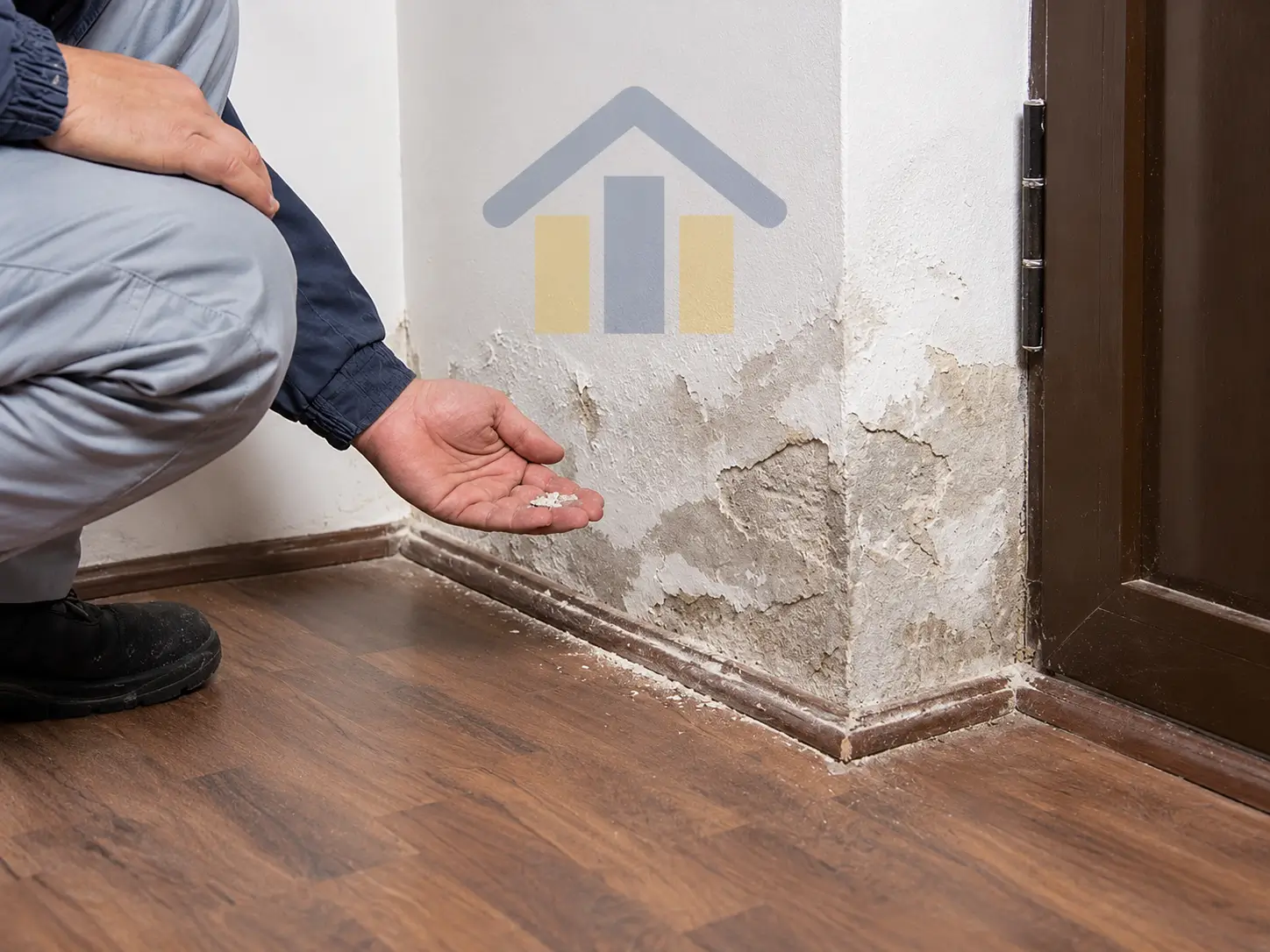
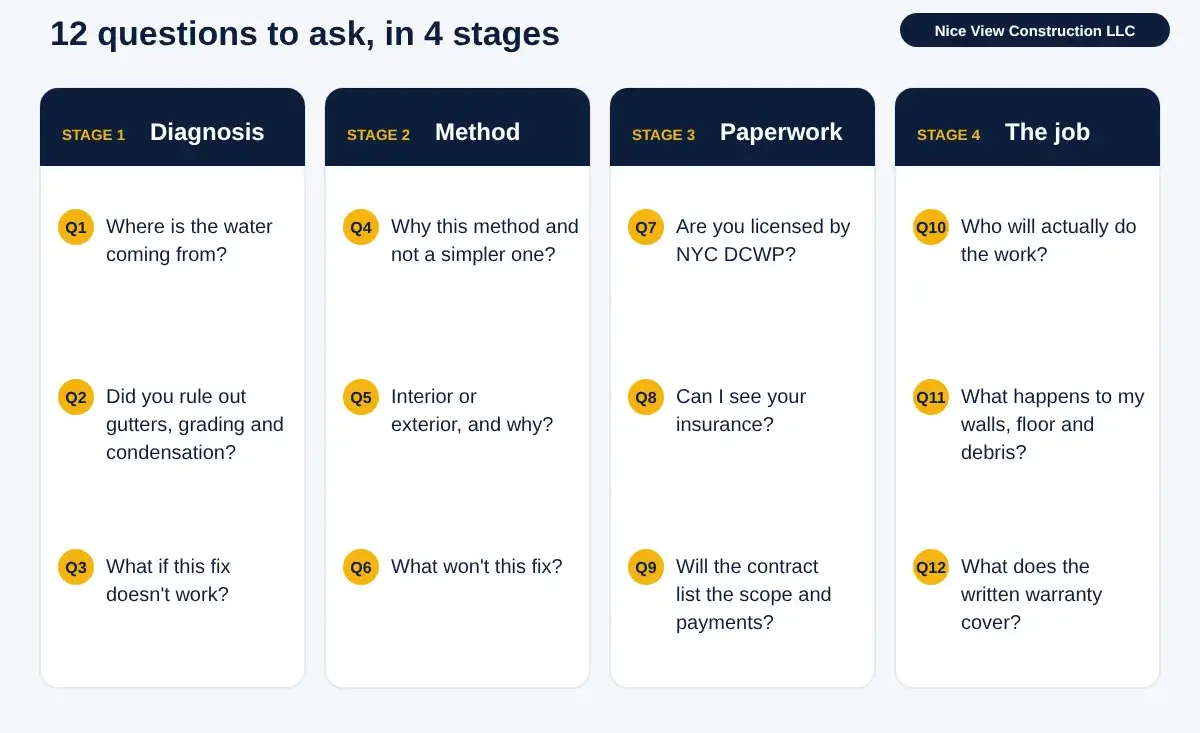
The questions to ask a basement waterproofing contractor fall into four groups: how they found the water source, why they chose the method, what the license and contract cover, and what happens during and after the job. Ask all twelve below at the inspection, and compare the answers, not just the totals, before you sign.
Before the inspection: what to have ready
Good answers depend on good information. A careful company will ask you about the history of the water, so have it ready:
- Photos of where water appears, taken during or just after it happens.
- When it happens: after heavy rain, after snowmelt, in humid summer weeks, or when a toilet or washer runs.
- How much: a damp patch, a trickle along one wall, or standing water.
- Recent changes: new paving, a deck, landscaping or sewer work near the house.
- Your plans: storage only, or a finished room or rental unit later.
Give every company the same information. That is the only way their answers can be compared.
Questions about the diagnosis
Most bad waterproofing jobs start with a wrong diagnosis. These three questions test whether the contractor found the source or just sold a system.
1. Where exactly is the water coming from?
Good answer: a specific entry point and cause, such as "the cove joint on the back wall, from groundwater pressure" or "this crack, from roof water dumped by the leader." Red flag: "Basements like this always leak" or a system recommendation before they've walked the outside of the house. Common causes are explained in why basements leak after storms.
2. Did you rule out gutters, grading, condensation and sewer backup?
Good answer: they checked the leaders and the slope of the ground, asked when the dampness appears, and can tell condensation from seepage. Water coming up a floor drain is a plumbing problem, and they should say so. Red flag: nobody looked outside, or every cause leads to the same product.
3. What happens if this fix doesn't stop the water?
Good answer: a clear, written next step, such as a return visit after heavy rain and what they will do at no extra cost. Red flag: a verbal "it won't leak, trust us."
Questions about the method
Two companies can find the same leak and propose very different fixes. These questions show whether the method fits the problem.
4. Why this method, and not a simpler one?
Good answer: they explain what cheaper options, like a leader extension or a single crack injection, would and wouldn't solve in your basement. Red flag: they can't name a simpler alternative, or they dismiss it without looking.
5. Interior or exterior, and why?
Good answer: exterior work stops water at the wall but needs digging; interior drainage manages water that gets in and works where you can't dig. In attached NYC homes, ask how they will treat a shared wall they can't excavate along. Red flag: one approach is presented as the only option without discussing your access. For our own approach, see waterproofing in the Bronx.
6. What won't this fix?
Good answer: honest limits. An interior system controls water but leaves the outside of the wall wet. Bowing walls or growing cracks need an engineer first. A shared wall treated from one side may still show some dampness. Red flag: "This fixes everything."
How to choose a waterproofing company: license, insurance and contract
These three questions protect your money. In New York City, the rules are set by the Department of Consumer and Worker Protection (DCWP).
| Question | What to check | Red flag |
|---|---|---|
| 7. Are you licensed by NYC DCWP? | A Home Improvement Contractor license is required for residential work that costs more than $200. Check the license, and call 311 for a "Business Background Check" on complaints. | No license number, or a license in a different name from the contract |
| 8. Can I see your insurance? | Proof of liability insurance and workers' compensation for the crew, in the company's name | "We're covered" with nothing in writing |
| 9. Will the contract list the scope and payments? | A written contract you both sign, naming the method, the length of wall, what happens to floors and walls, and the payment schedule. DCWP advises paying no more than 25% upfront. | Cash only, full payment upfront, or no written contract |
DCWP also says home improvement contractors may not arrange or offer financing for a home improvement loan. Arrange your own through a bank or credit union. The city's tips for hiring a home improvement contractor list these rules in one place.
Questions about the crew, the job and the warranty
10. Who will actually do the work?
Good answer: the name of the company's own crew, or the subcontractor they use and who supervises them. Red flag: the salesperson can't say who will show up.
11. What happens to my walls, floor and the debris?
Good answer: a written note on which parts of the floor or finished wall will be opened, how they will be patched, how dust is controlled and who removes the debris. Red flag: "We'll figure that out on the day."
12. What does the written warranty cover?
Good answer: a written warranty that says what is covered (leaks, the pump, labor), for how long, what voids it, and whether it transfers to a new owner. Red flag: a "lifetime" promise with no written terms. A warranty is only as good as its wording.
How to compare two waterproofing quotes
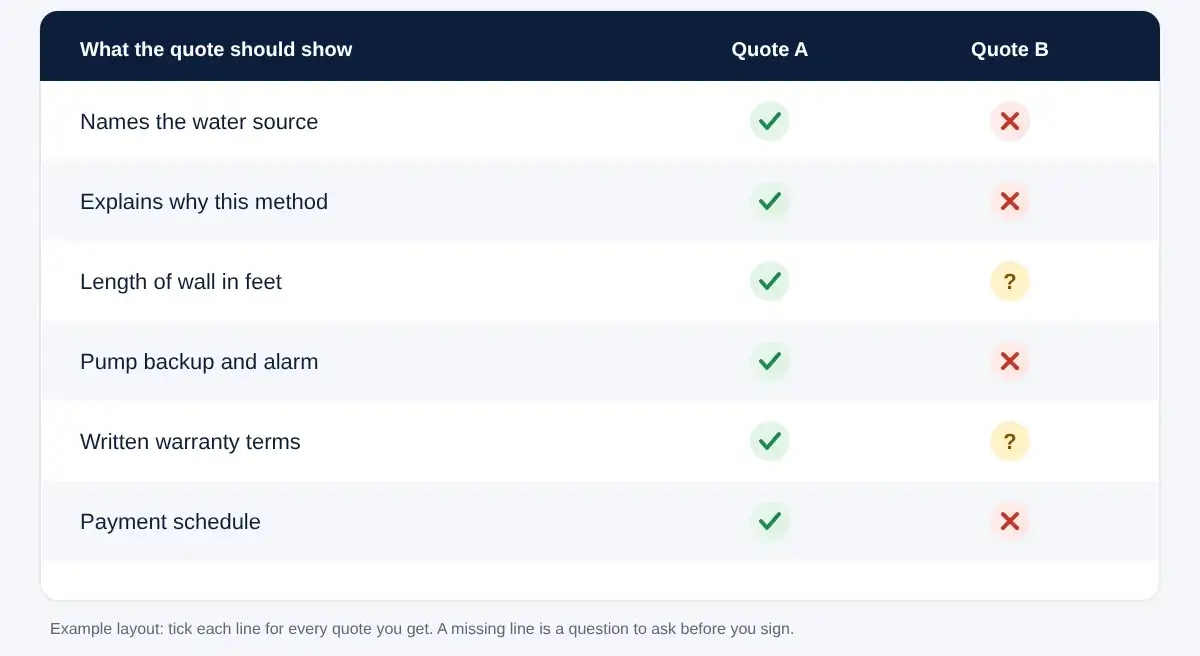
Totals alone don't tell you much when two quotes describe different jobs. Line them up instead.
| Line on the quote | Why it matters |
|---|---|
| Water source named | If two quotes name different sources, at least one diagnosis is wrong. Ask both to explain. |
| Method and the reason for it | Shows whether the fix matches the cause, not just the company's product. |
| Length of wall, in feet | Lets you see whether both quotes cover the same area. |
| Pump backup and alarm | An interior system depends on the pump; check what happens in a power cut. |
| Written warranty terms | Coverage, length, exclusions and transfer, side by side. |
| Payment schedule | Deposit, stage payments and final payment after the work is done. |
At Nice View Construction, the written scope lists each of these lines, so you can hold it against any other quote. Our prices are quoted after a short scope call, with all costs listed upfront.
Checklist: questions to ask a basement waterproofing contractor
- Where exactly is the water coming from?
- Did you rule out gutters, grading, condensation and sewer backup?
- What happens if this fix doesn't stop the water?
- Why this method, and not a simpler one?
- Interior or exterior, and why?
- What won't this fix?
- Are you licensed by NYC DCWP?
- Can I see your insurance, including workers' compensation?
- Will the contract list the scope and the payment schedule?
- Who will actually do the work?
- What happens to my walls, floor and the debris?
- What does the written warranty cover?
Frequently asked questions
How many quotes should I get for basement waterproofing?
Get at least three quotes, and give each company the same information about when and where the water appears. Compare the water source each one names, the method, the length of wall covered and the warranty terms. If the diagnoses differ, ask each company to explain before choosing on price.
Do basement waterproofing contractors need a license in NYC?
Yes, for most homeowner jobs. NYC DCWP requires a Home Improvement Contractor license for residential work that costs more than $200. You can check a license with DCWP online or through 311, and ask 311 for a Business Background Check to see the company's complaint history.
What should a basement waterproofing warranty cover?
A useful warranty is in writing and states what is covered, such as new leaks, the pump or labor, and for how long. It should also list what voids it and say whether it transfers to a new owner. Treat a "lifetime" promise without written terms as no warranty at all.
What will a waterproofing company ask me during the inspection?
A careful company asks how long you've lived in the home, how often water appears, where you find it and how much, whether anything changed outside recently, and what you plan to use the basement for. Photos taken during a leak help them find the source faster.
Want a second opinion on a quote?
We inspect, find where the water enters and give you a written scope you can compare line by line.