
How to Choose a House Painter in the Bronx: 8 Checks Before You Hire
License, insurance, lead-safe work, and a written quote that lists the prep: what to check so you compare painters fairly.
Featured image
Ratio / size: 4:3 · 1200 × 900 px
File name: how-to-choose-a-house-painter-in-the-bronx.webp
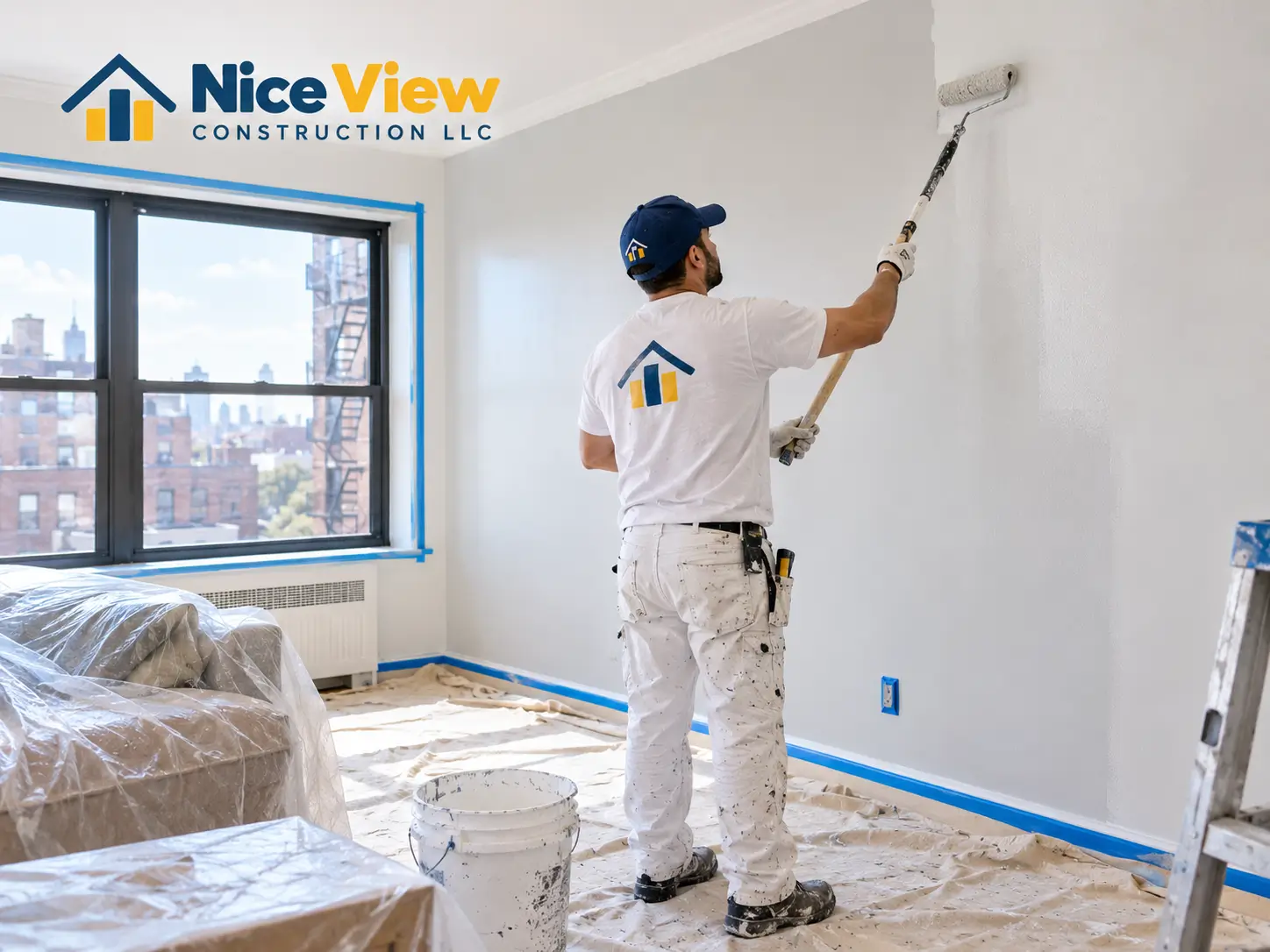
Situation: A house painter rolling a fresh coat of paint on a smooth, prepared interior wall in a bright Bronx apartment. Floor covered with drop cloths, furniture wrapped in plastic, painter's tape on the trim. Daylight, no text in the image. Keep the painter and the wall in the top two-thirds, because mobile crops the image to 16:10 from the top.
Image title: How to Choose a House Painter in the Bronx
Alt text: House painter rolling a fresh coat on a prepared interior wall, with floors and furniture covered
To choose a house painter in the Bronx, check four things first: their license status, their insurance, whether they work lead-safe in older homes, and whether the quote lists every prep step in writing. Then compare paint, schedule, warranty and payment terms line by line, not just the total.
The 8 checks at a glance
- License status checked with DCWP, plus a 311 background check
- Proof of liability insurance and workers' compensation
- Lead-safe certified firm if the home was built before 1978
- A written quote that lists the prep, room by room
- Paint brand, product, sheen and number of coats
- Start date, working hours, protection and cleanup
- A written warranty
- Payments in stages, never all upfront
Internal image 1
Ratio / size: 16:10 · 1200 × 750 px
File name: 8-Checks-Before-You-Hire-a-House-Painter.webp
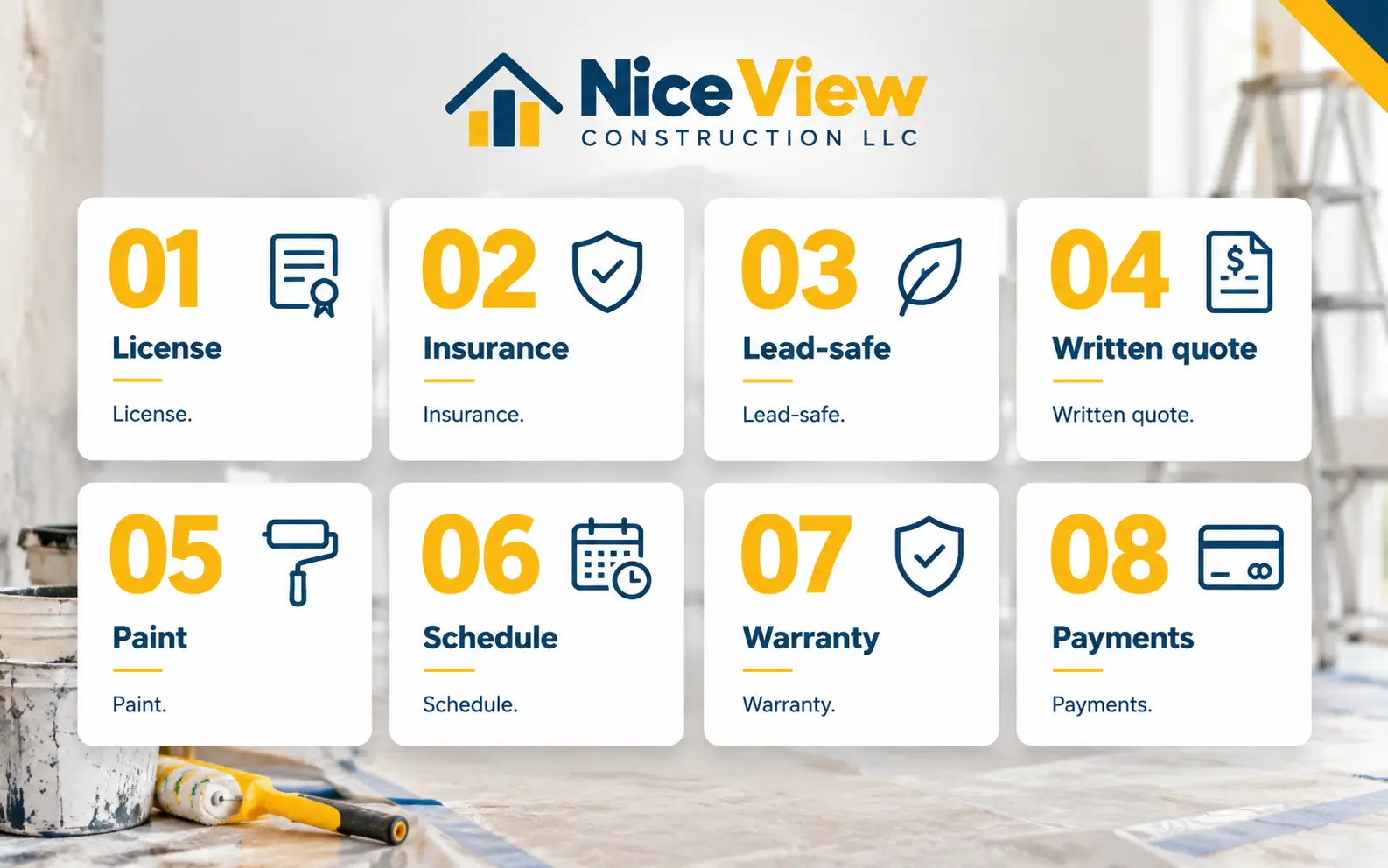
Situation: Infographic with 8 white cards in two rows. Each card has a big yellow number (01–08), a title and one line: License, Insurance, Lead-safe, Written quote, Paint, Schedule, Warranty, Payments.
Image title: 8 Checks Before You Hire a House Painter
Alt text: Eight cards listing the checks before hiring a house painter: license, insurance, lead-safe work, written quote, paint, schedule, warranty and payments
1. Check the painter's license status
Start with the license. In New York City, the Department of Consumer and Worker Protection (DCWP) requires a Home Improvement Contractor license for home improvement work on residential buildings that costs more than $200. Ask the painter for their license number and check its status with DCWP online or by calling 311. If a painter says they don't need a license for your job, ask DCWP or 311 to confirm before you sign.
While you're on the phone with 311, ask for a "Business Background Check". It shows complaints filed against the business with DCWP.
2. Ask for proof of insurance
Ask for certificates, not a verbal "we're covered." You want liability insurance, which covers damage to your home, and workers' compensation for the crew. Both matter more on exterior jobs, where painters work on ladders or scaffolds. The name on the certificate should match the name on the quote.
3. Older home? Ask about lead-safe work
Homes built before 1978 may contain lead-based paint. Under the EPA's Renovation, Repair and Painting (RRP) rule, anyone paid to do work that disturbs painted surfaces in a home built before 1978 must be certified and use lead-safe work practices. Scraping and sanding old paint is exactly that kind of work.
Ask the painter whether the firm is EPA lead-safe certified and how they contain dust and clean up. You can look up certified firms through the EPA's Renovation, Repair and Painting Program page. Landlords also have their own NYC lead rules; those are a separate topic.
4. Get a written quote that lists the prep
Prep is where painting quotes differ most, and where a low price usually hides. A good quote lists every step for each room or surface: scraping loose paint, patching holes and cracks, sanding, priming bare or patched spots, caulking gaps, and moving and covering furniture. It also says which surfaces are included: walls, ceilings, trim, doors, closets.
If you are getting quotes for interior and exterior painting, ask every painter to price the same list. Otherwise you are comparing different jobs.
How to read a painting quote
Internal image 2
Ratio / size: 16:10 · 1200 × 750 px
File name: How-to-Read-a-Painting-Quote.webp
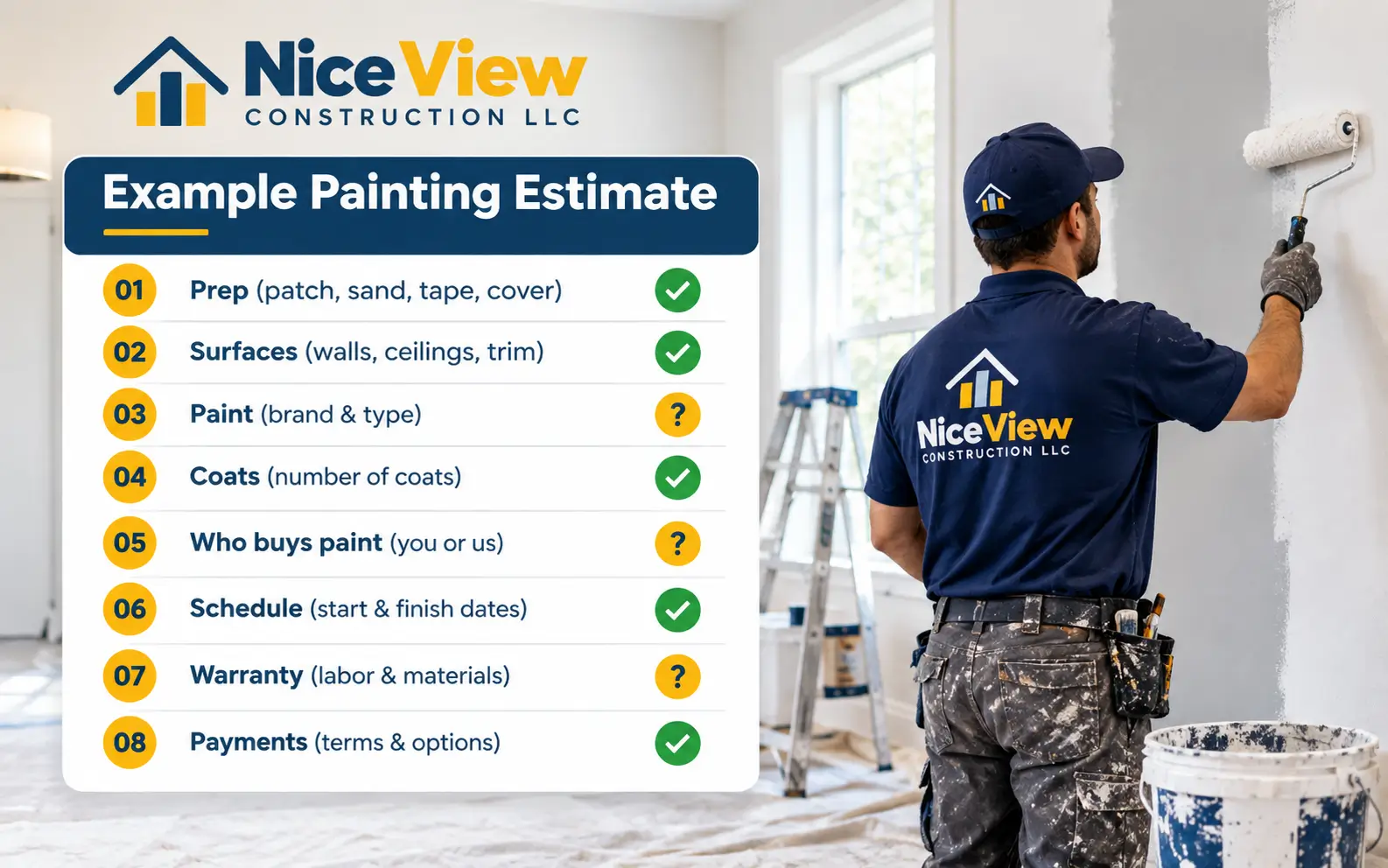
Situation: Example painting estimate with 8 lines: prep, surfaces, paint, coats, who buys paint, schedule, warranty, payments. Green tick on complete lines, yellow question mark on missing ones.
Image title: How to Read a Painting Quote
Alt text: Example painting estimate with lines for prep, surfaces, paint, coats, who buys the paint, schedule, warranty and payments
| Line on the quote | What it should say | Red flag |
|---|---|---|
| Prep | Each step, per room or surface | "Prep included" with no detail |
| Surfaces | Walls, ceilings, trim, doors, named one by one | "Paint the apartment" |
| Paint | Brand, product line and sheen | "Premium paint" with no name |
| Coats | Number of coats on each surface | Not mentioned |
| Who buys the paint | Painter or you, and whether it's in the price | Paint billed separately after the job |
| Schedule | Start date, daily hours, expected finish | "We'll fit you in" |
| Warranty | Written terms and length | Verbal promise only |
| Payments | Deposit, stage payments, final payment after the walk-through | Full payment upfront, or cash only |
Be careful with a quote that is much lower than the others. It often leaves out prep or a coat. At the Nice View Construction team, every quote lists these lines, and our prices are given after a short scope call, with all costs listed upfront.
5. Agree on the paint
Ask the painter to name the exact product and explain the options: some paints hold up better to weather or scrubbing, and some are lower in odor. Agree on the sheen for each surface, from flat to semi-gloss, and get it written on the quote. Ask how many coats are included, and who buys the paint, since that affects the price.
6. Pin down the schedule and the mess
Get the start date and the working hours in writing, plus how long each room will be out of use. Ask how floors and furniture will be protected, where the crew will clean brushes and rollers, and who removes the debris each day. In an apartment or co-op, ask whether the building has rules on work hours or elevator use, and plan around them.
7. Get the warranty in writing
A useful warranty says what it covers, such as peeling or blistering caused by poor workmanship, for how long, and what voids it. Paint will not fix moisture: if a wall is damp or a pipe is leaking, that has to be repaired first, or no warranty will hold. Damaged plaster or rotten trim is a repair job, sometimes part of larger renovation projects.
8. Pay in stages, not upfront
DCWP advises paying no more than 25% of the total contract amount upfront, and never paying in cash or without a contract. Contractors must give you a written contract that you both sign. Tie the remaining payments to finished stages, with the final payment after a walk-through where you check every room.
How to choose a house painter in the Bronx: questions to ask a painter
- What is your DCWP license number, and is it in the name on this quote?
- Can you send your insurance certificates, including workers' compensation?
- Is your firm EPA lead-safe certified? How will you contain dust?
- Which prep steps are included for each room?
- Which paint, which sheen and how many coats?
- Who buys the paint, and is it in the price?
- Who will be on site each day, and who is in charge?
- What are the start date and working hours?
- What does your warranty cover, and is it in writing?
- What is the payment schedule?
Frequently asked questions
How many painting quotes should I get?
Get at least three quotes, and ask every painter to price the same list of rooms, surfaces, prep steps and coats. Be careful with a quote that is much lower than the rest: it often leaves out prep or a coat. Compare the lines on each quote, not just the totals.
Do house painters need a license in NYC?
NYC DCWP requires a Home Improvement Contractor license for home improvement work on residential buildings that costs more than $200. Ask the painter for their license number and check it with DCWP or 311. If a painter says your job doesn't need one, confirm that with DCWP before you sign.
Does a painter need to be lead-safe certified?
For paid work that disturbs painted surfaces in a home built before 1978, yes. The EPA's Renovation, Repair and Painting rule requires the firm to be certified and to use lead-safe work practices. Scraping and sanding old paint counts, so ask for the firm's certification before work starts.
Planning to paint?
We walk through the rooms with you and send a written scope listing the prep, paint, coats and schedule.