
Waterproofing Basement Methods: A Complete Guide for NYC Homes
Find where the water comes from, choose between interior and exterior methods, and know which jobs you can do yourself and which need a pro.
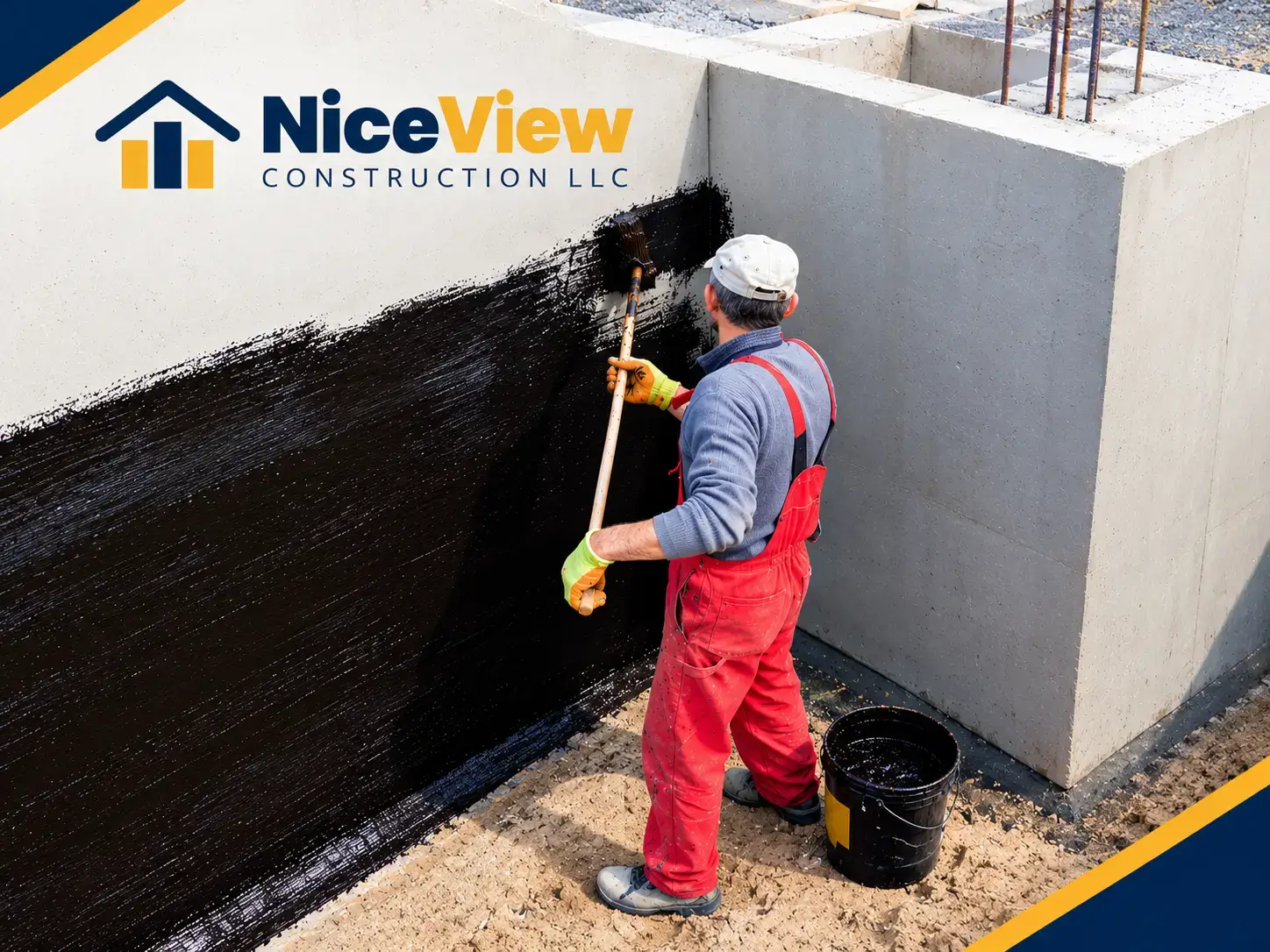
Waterproofing basement walls and floors works only when the method matches the water source. Exterior waterproofing stops water at the outside of the wall; interior waterproofing collects the water that gets in and pumps it away. Start by finding out where the water comes from, because a gutter, a crack and condensation each need a different fix.
Signs your basement needs waterproofing
Most basements show trouble long before there is a puddle. Look for:
- A musty smell that does not go away after airing the room out.
- White, chalky powder on the walls. This is efflorescence: salts left behind when water moves through masonry and dries.
- Water or dark staining where the wall meets the floor. This joint, called the cove joint, is a common entry point.
- Cracks in the walls or floor, especially ones that look damp after rain.
- Peeling paint, flaking plaster or mold on the lower part of the walls.
One sign on its own does not prove you need a full system. It tells you to find the source first.
Where does the water come from?
Water gets into a basement in a few predictable ways. Match what you see to the likely cause before you spend money. For the first steps after a storm, see why basements leak after heavy rain.
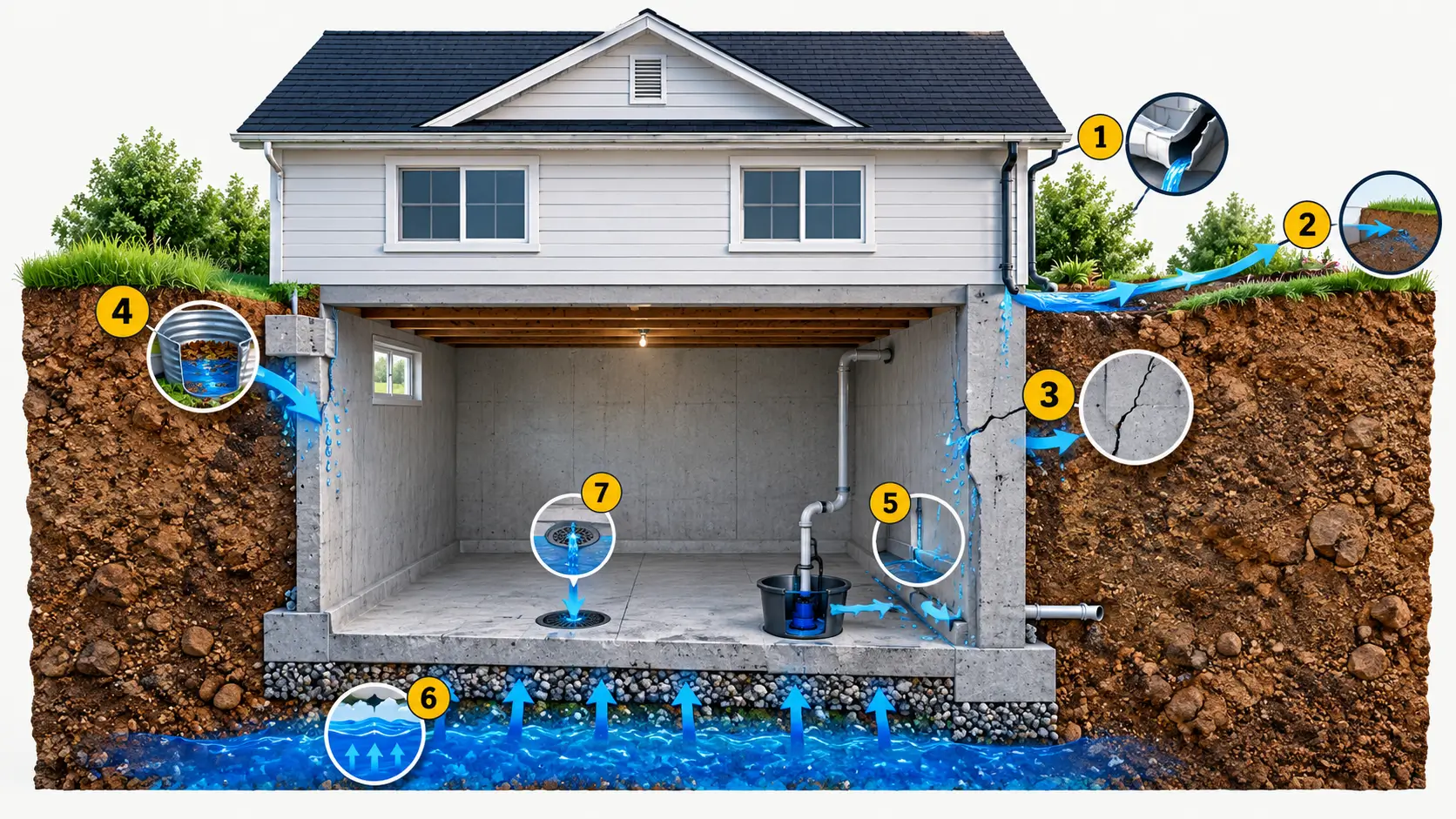
| What you see | Likely cause | Usual fix |
|---|---|---|
| Water along one wall after rain | Roof water dumped next to the foundation, or ground that slopes toward the house | Clear gutters, extend leaders, regrade the soil |
| A trickle through a single crack | A crack in a poured concrete wall | Crack injection from inside, or exterior repair |
| Water rising through the floor or at the cove joint | Hydrostatic pressure: groundwater pushing on the slab and walls | Interior drain and sump pump, or exterior drain tile |
| Water around a basement window | A window well that fills and does not drain | Clean or fix the well drain, add a cover |
| Damp walls in summer, no rain needed | Condensation: humid air meeting cool walls | Dehumidifier and ventilation, not waterproofing |
| Dirty water coming up a floor drain | Sewer backup | A plumbing fix, not waterproofing |
The condensation test
Tape a square of plastic wrap or aluminum foil tightly to the damp wall and leave it for 24 hours. If moisture forms on the room side, the air is the problem and a dehumidifier is the fix. If moisture forms behind it, against the wall, water is coming through the masonry.
Exterior waterproofing methods
Exterior methods stop water before it reaches the wall. They range from simple yard work to digging down to the footings.
- Gutters, leaders and grading. Many "leaks" are roof water landing beside the house. Keep gutters clear, extend leaders so they empty well away from the foundation, and slope the soil away from the walls. Our gutters and leaders work often fixes the problem before any waterproofing is needed.
- Excavation with a membrane or coating. The soil is dug out down to the footings, the wall is cleaned and repaired, and a waterproof membrane or coating is applied to the outside face. Concrete is not waterproof on its own, so this layer does the work.
- Exterior drain tile. A perforated pipe laid along the footing collects groundwater and carries it away before it builds up against the wall.
Exterior work treats the cause, but it is the most disruptive option: it needs open ground around the house, and landscaping, steps or walkways may have to come out.
Interior waterproofing methods
Interior methods work from inside the basement. Some stop water at a single point; others manage water that has already come through the wall.
Sealers and waterproof paint
Masonry sealers can help with light dampness on a dry wall. They are not a fix for running water or pressure from groundwater, which pushes the coating off the wall.
Crack injection
Cracks in poured concrete can be sealed by injecting epoxy or polyurethane from inside. Epoxy bonds the crack faces together; polyurethane expands to fill the crack and stays flexible. Hydraulic cement is also used to plug active leaks. Structural cracks, such as wide or growing ones, need an engineer's opinion first.
Interior drain and sump pump
A channel is cut along the edge of the floor, a perforated drain is laid in it, and the water runs to a sump pit where a pump sends it outside. This system does not stop water from entering the wall; it controls where that water goes. Ask for a battery backup pump and a water alarm so a power cut does not leave you exposed.
Dehumidifier
A dehumidifier deals with condensation and the dampness that remains after other fixes. It does not stop leaks.
Interior vs exterior waterproofing: side by side
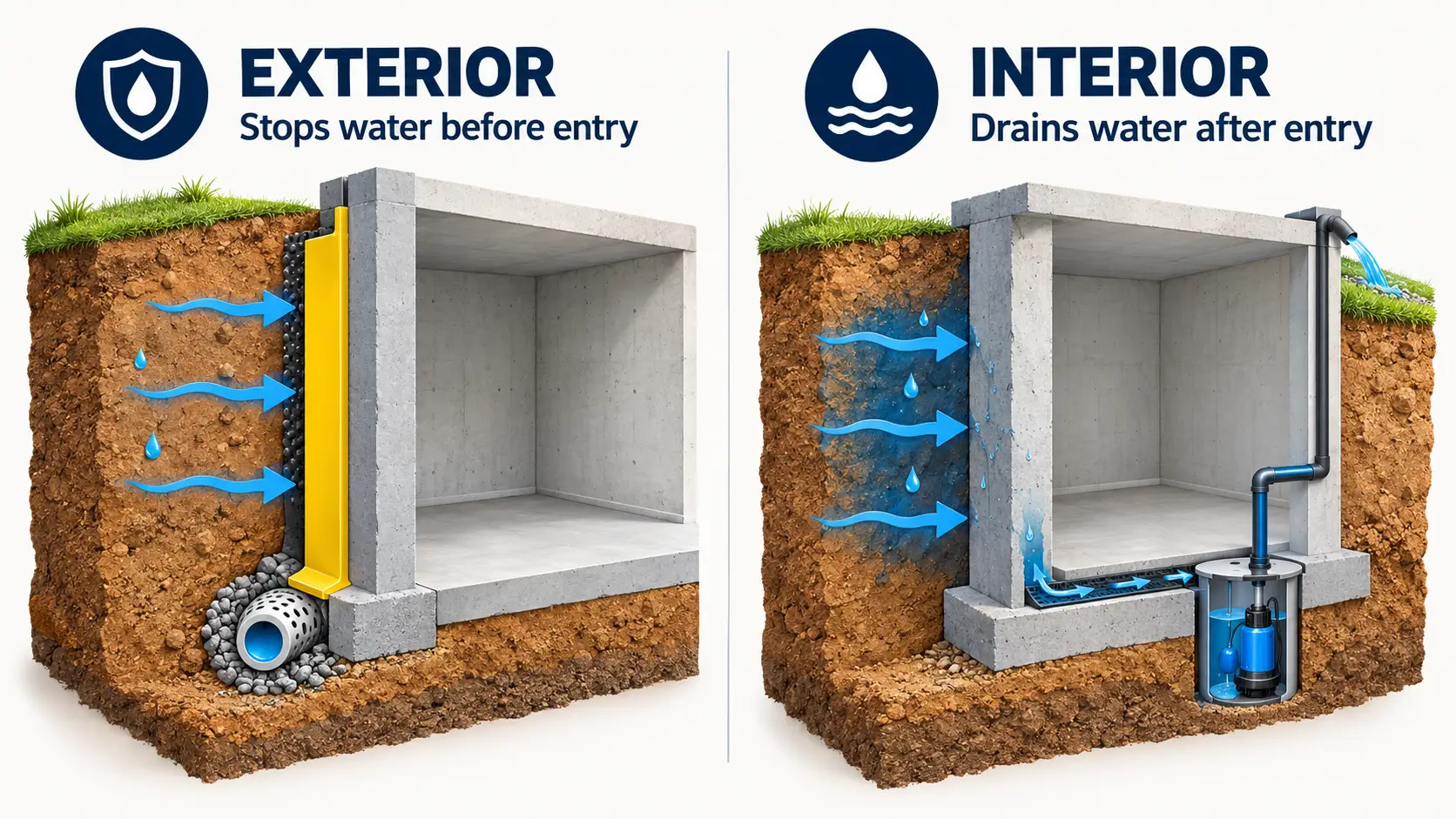
| Factor | Exterior | Interior |
|---|---|---|
| What it does | Keeps water out of the wall | Collects water that gets in and pumps it away |
| Disruption | Digging around the house; yard and walkways affected | Work inside; floor edge opened; basement must be cleared |
| Best for | Walls you can reach from outside; protecting the wall itself | Groundwater under the slab; homes with no outside access |
| Ongoing care | Gutters, leaders and grading kept in order | Pump tested, backup working, pit kept clear |
| Limits in NYC | Often impossible on shared walls or where the lot line meets the wall | Wall stays wet on the outside; one-sided fix |
Many basements end up with a mix: gutter and grading fixes outside, plus crack repair or an interior drain inside.
What's different in attached NYC homes
Most waterproofing guides assume a detached house with a yard on every side. Bronx row houses and two-family homes rarely work that way.
- Shared walls. You usually can't dig along a wall you share with a neighbor, so that wall is treated from inside.
- Little room to excavate. Front stoops, sidewalks and narrow side yards limit how much exterior work is possible.
- Older foundations. Stone or brick foundations have many joints. They often need repointing and water management rather than a single crack repair.
- Floor-drain backups. Water coming up through a floor drain is a sewer problem, not a wall problem. NYC DEP says property owners are responsible for maintaining and repairing their sewer service lines, and asks you to report sewage backups to 311. Read the city's guidance on sewer backups, and call a licensed plumber for this part.
Because of this, a fix on one side of a shared wall may reduce water rather than stop it completely. A good contractor tells you that before the job, not after.
How much does basement waterproofing cost?
Angi's cost guide (updated July 20, 2026) puts the national average at $5,242, with most homeowners paying between $2,461 and $8,203. Your price depends on:
- the method: sealing a crack costs far less than excavation or a full interior drain;
- how many feet of wall need work and how deep the basement is;
- access: shared walls, tight lots and finished rooms add labor;
- repairs found along the way, such as cracked masonry or a failed leader.
Prices were checked on the publish date and can change; confirm current costs before you buy.
Our own prices are quoted after a short scope call, with all costs listed upfront. Talk to our waterproofing team for a quote based on your basement.
DIY or hire a pro?
You can do some basement waterproofing yourself. The line is pressure and structure.
Cleaning gutters, adding leader extensions, sloping soil away from the house, sealing a small dry crack, applying sealer to a damp wall, running a dehumidifier.
Water rising through the floor, an interior drain or sump pump, any excavation, wide or growing cracks, bowing walls, and any leak that comes back after a DIY fix.
Bowing walls or cracks that keep widening need a structural engineer before any waterproofing. Sealing over a structural problem hides it.
Waterproofing a finished basement
If the basement is already finished, start with the outside: gutters, leaders and grading cost little and don't touch your walls. Crack injection can sometimes be done through a small opening. An interior drain usually means removing the bottom of the drywall and the flooring along the walls. Moldy drywall, insulation or carpet should come out, because finishing over wet masonry traps moisture.
Is it a scam? Red flags in short
- A full system is recommended before anyone has checked the gutters, grading or for condensation.
- Pressure to sign the same day, or a "today only" price.
- A "lifetime dry" promise without a written warranty that says what is covered.
- No written scope listing the method, the length of wall and what happens to your floor and walls.
Before you sign, go through these questions to ask before you hire.
How long does it last? Maintenance checklist
How long waterproofing lasts depends on the method and on upkeep. Most failures start with something small. Check these every year, and after big storms:
- Gutters clear and leaders attached, emptying away from the house.
- Soil still sloping away from the foundation.
- Sump pump tested by pouring water into the pit; backup battery and alarm working.
- Old cracks checked for new dampness, and new cracks noted with a date.
Frequently asked questions
What is the most effective way to waterproof a basement?
The most effective way is the one that matches the water source. Exterior waterproofing with a membrane and drain tile stops water before it reaches the wall. Where digging isn't possible, an interior drain with a sump pump controls the water. Gutter and grading problems should be fixed first in every case.
How much does it cost to waterproof a basement?
Angi's cost guide, updated July 20, 2026, lists a national average of $5,242, with most homeowners paying between $2,461 and $8,203. Sealing a small crack costs far less than excavation or a full interior drain. Wall length, access and repairs found along the way change the final price.
Can I waterproof an existing basement myself?
Partly. Cleaning gutters, extending leaders, regrading soil, sealing small dry cracks and running a dehumidifier are reasonable DIY jobs. Water rising through the floor, excavation, interior drains, sump pumps and wide or growing cracks need a professional, because a mistake there can let water back in or hide a structural problem.
How do I stop water seeping through basement walls?
First run the condensation test to confirm the water comes through the wall. Then fix the outside: gutters, leaders and grading. A single crack can be injected with epoxy or polyurethane. If water seeps along the whole wall or at the floor joint, groundwater pressure is likely, and an interior or exterior drain is needed.
Is interior or exterior waterproofing better?
Exterior waterproofing protects the wall itself and treats the cause, but it needs digging and outside access. Interior waterproofing is less disruptive and works on shared walls, but it manages water instead of keeping it out. In attached NYC homes, interior work is often the only option on at least one wall.
Conclusion
Waterproofing basement problems starts with diagnosis, not with a product. Check gutters, leaders and grading first, and run the condensation test before paying for any system. If water still comes in, choose exterior work where you can reach the wall and interior drainage where you can't, which is common on shared walls in NYC. Call an engineer for bowing walls or growing cracks, and a plumber for floor-drain backups.
At Nice View Construction we work in the same order: find the source, rule out gutters, grading, condensation and sewer backup, then recommend the least invasive fix and recheck after the next heavy rain.
Water in your basement?
We find where the water enters before we recommend anything, and we tell you which fixes you can skip.